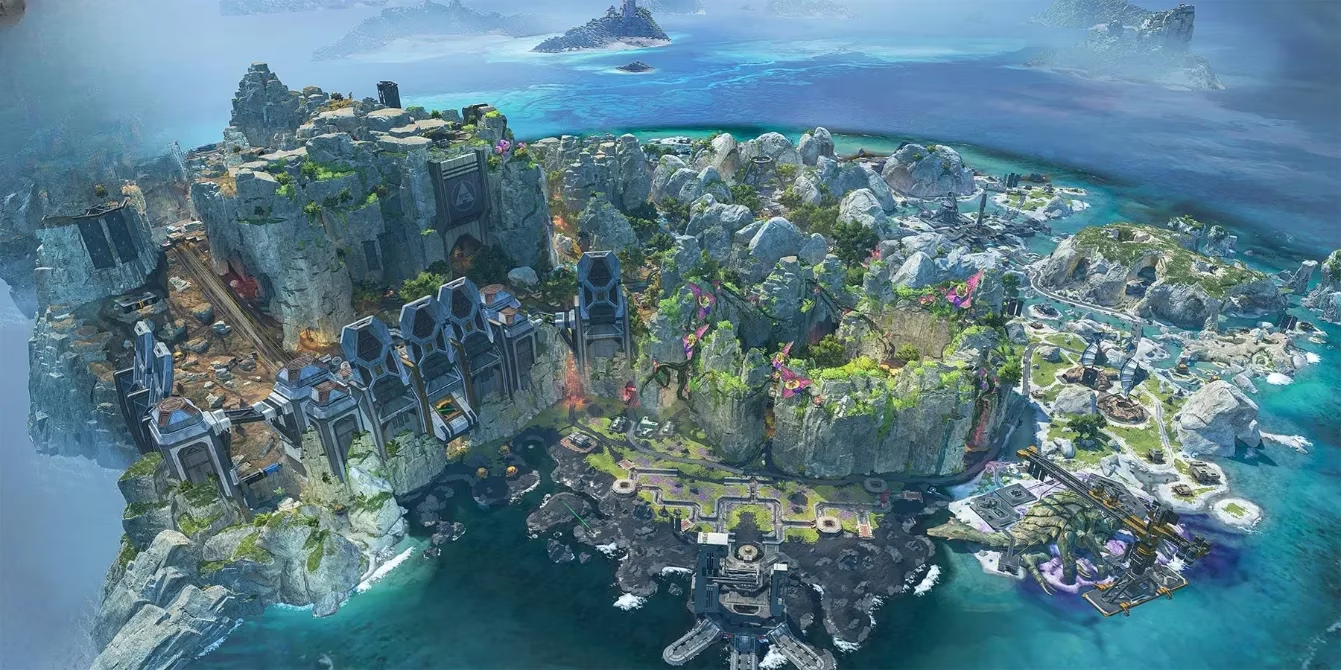
Looking back from 2026, it’s strange how vividly I remember the hollow thrill of booting up Apex Legends’ Season 13, Saviors. Live-service games have a way of aging memories, polishing the good, blurring the bad, but this one remains like a dull film in my mind. I was ready for something seismic, a metamorphosis of Storm Point that would make my squad’s drop-routes feel alien again. Instead, what I got felt like opening a novel that promised a new chapter but only delivered a couple of flimsy appendix pages. It’s a frustration that still echoes, especially when I look at how far map design has come since then.
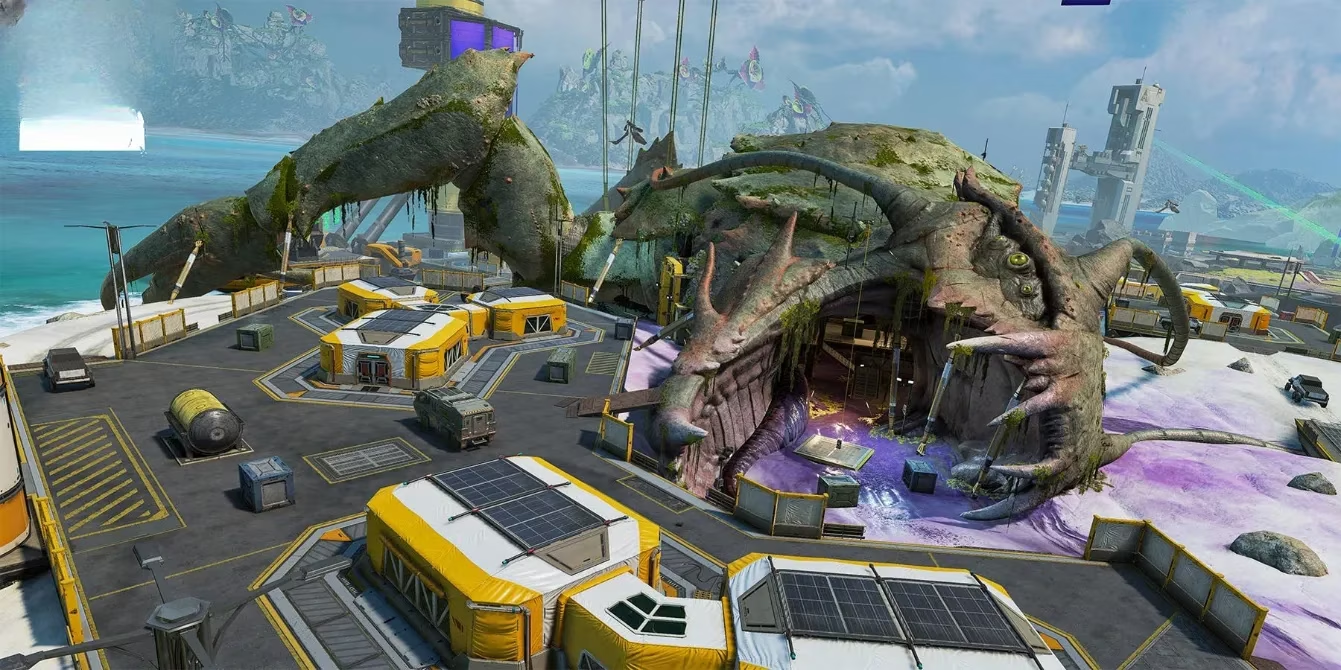
The headline feature, the Downed Beast, quickly became a monument to my disappointment. Advertised as the corpse of a creature slain in the launch trailer, it filled the vacant stretch between The Mill and North Pad. I dropped there expecting a sprawling, vertical labyrinth carved from bones and sinew. The reality was a handful of squat buildings clustering around a carcass that offered only two playable levels: the viscera-strewn interior with its high-tier loot platforms, and the sun-bleached spine accessible via ziplines. The first time I slid down into the beast’s maw, the atmosphere bristled with promise. By the third match, the layout had revealed itself as shallow as a puddle after a light rain. There were no secret chambers that demanded a crypto-drone to scout, no dynamic cover that shifted during the ring’s advance. It was a novelty prop, not a living part of the map. Playing around it felt like discovering your favorite carnival had added only a single, slightly taller Ferris wheel—exciting for exactly two rotations before you remembered the rest of the park was exactly the same.
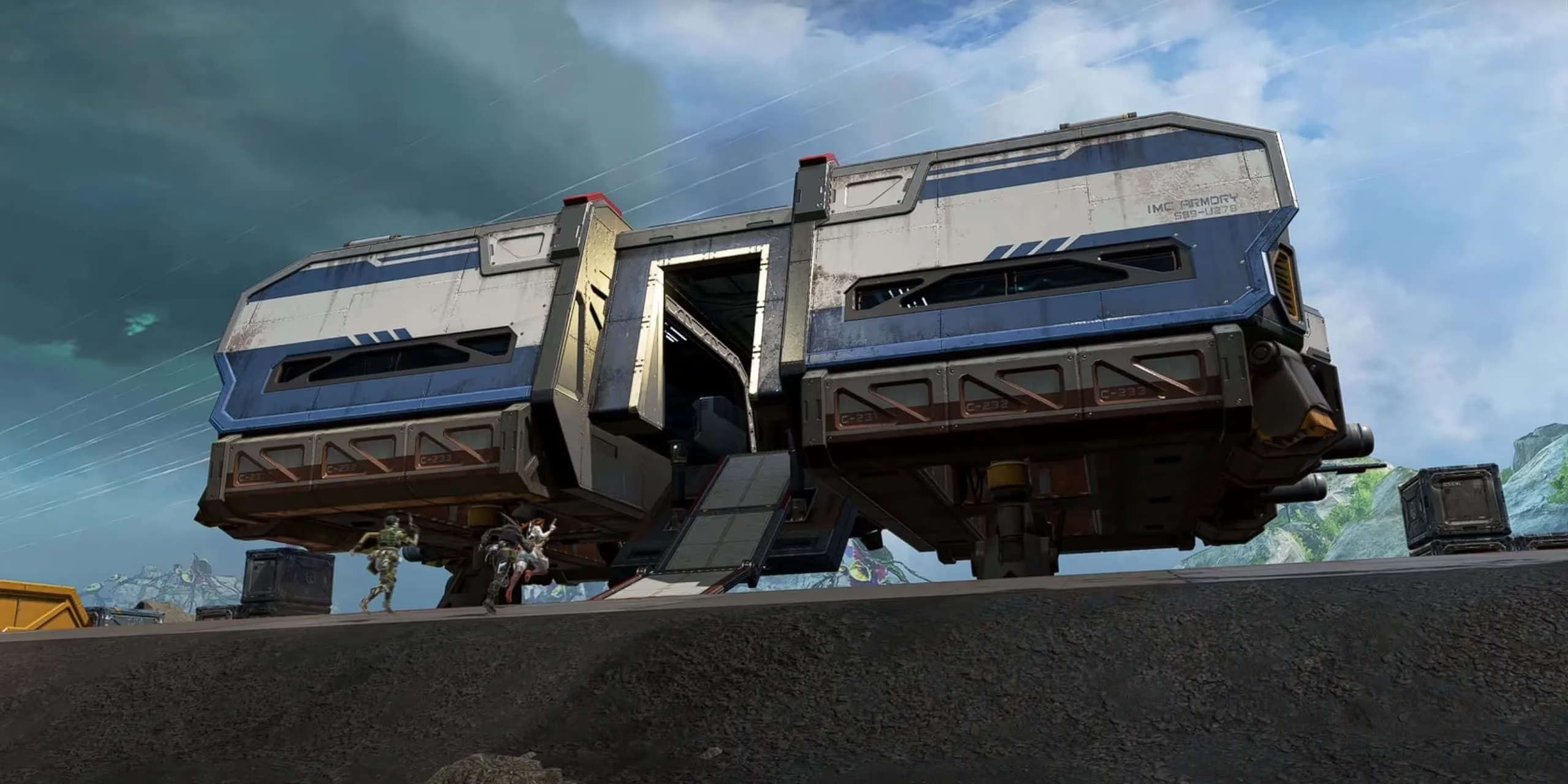
Then there were the four IMC Armories. These claustrophobic bunkers promised risk-reward gameplay: interact with a panel, survive waves of Spectre NPCs for sixty seconds, and earn loot upgrades. On paper, it read like a tense PvE interlude. In practice, these armories were deathtraps so obvious they could have come with neon warning signs. The interior spaces were cramped to the point of asphyxiation, leaving no room for creative movement. Activating one felt like tripping a mousetrap and then proudly broadcasting your position to every predator squad, ready to camp the single predictable exit. Sure, the redeploy launchpad after survival was a nice touch, but the build-up was dismal. The armories were mostly tucked into low-traffic zones, so anyone craving genuine combat—the lifeblood of Apex—simply bypassed them. I remember my team trying one exactly once, emerging with upgraded shields but shattered spirits, and we never touched another. It was akin to adding a coin-operated animatronic to a ghost town: technically new, yet utterly disconnected from the flow of the place.
Listing these changes, the tally feels almost insulting. Two map modifications for a season meant to sustain players for three months. In the context of 2026, where map evolutions now routinely transform entire biomes, the Saviors update looks almost laughable. But even back then, I had a clear benchmark. Season 4’s Assimilation had turned World’s Edge inside out. The skybox deepened from a cheerful blue to a brooding twilight, perfectly mirroring Revenant’s arrival. The Planet Harvester rose in the center, a vertical powerhouse that reshaped rotations, while Capitol City cleaved into Fragment East and West, birthing a new hot-drop culture. Fissures scarred the landscape, forcing players to rethink every path. That season didn’t just add attractions; it rebuilt the amusement park. By contrast, Saviors’ Storm Point felt like an artist holding a masterful painting and refusing to do more than dab two new specks of color in the corner, assuming no one would notice the rest had faded.
Another metaphor haunts me when I think of this update: it was like a child being given a colossal sandbox and only two new glass marbles, while every grain of sand had already been sifted, catalogued, and memorized. The vastness of Storm Point amplified the emptiness of the additions. The map’s sheer size had always been its blessing and curse, but seasonal mauling could have carved new ravines, reconnected forgotten corners, or sunk a region into the sea. Respawn chose to sprinkle a beast carcass and some steel boxes. The result was a playground I learned to exhaustion in a single evening, after which my squad reverted to fragmenting on Kings Canyon or waiting for World’s Edge queues.
Even now, in 2026, the Saviors season serves as a cautionary tale on forums and Discord chats. It reminds me that a new legend, a battle pass, and a couple of structural pinpricks can’t hide a lack of real ambition. I forgave many things in Apex—server hiccups, audio bugs, the occasional cheater—but I could not forgive boredom. And that’s what the Storm Point changes delivered: a deep, sterile boredom that set in faster than any ring closing.
Ultimately, players don’t need the map to be gigantic; they need it to be surprising. Season 13’s Storm Point was a giant that had forgotten how to dance, and the Saviors update gave it lead boots instead of new music. I still play Apex, but I never look back at that season with anything resembling fondness. It’s a scar on my memory, a flat note in an otherwise dynamic symphony.
Leave a Comment
Comments