When Respawn Entertainment unleashed Apex Legends upon the gaming world in 2019, it delivered a seismic shock to the battle royale landscape. 🎯 Dominated by established giants like Fortnite and PUBG, the genre was ripe for innovation, and Apex Legends provided exactly that. By masterfully blending hero shooter mechanics with the tense, last-team-standing framework of a battle royale, Respawn crafted an experience that felt both familiar and thrillingly novel. The game’s emphasis on character abilities, squad synergy, and breakneck movement created a gameplay loop that instantly captivated millions. As it now enters its later stages in 2026, having sustained momentum through numerous seasons, Apex Legends stands as a monumental success story—a testament to live-service done right. However, even the most resilient titans eventually face their twilight, and recent developments suggest that future may be approaching faster than the game's dedicated community anticipates.
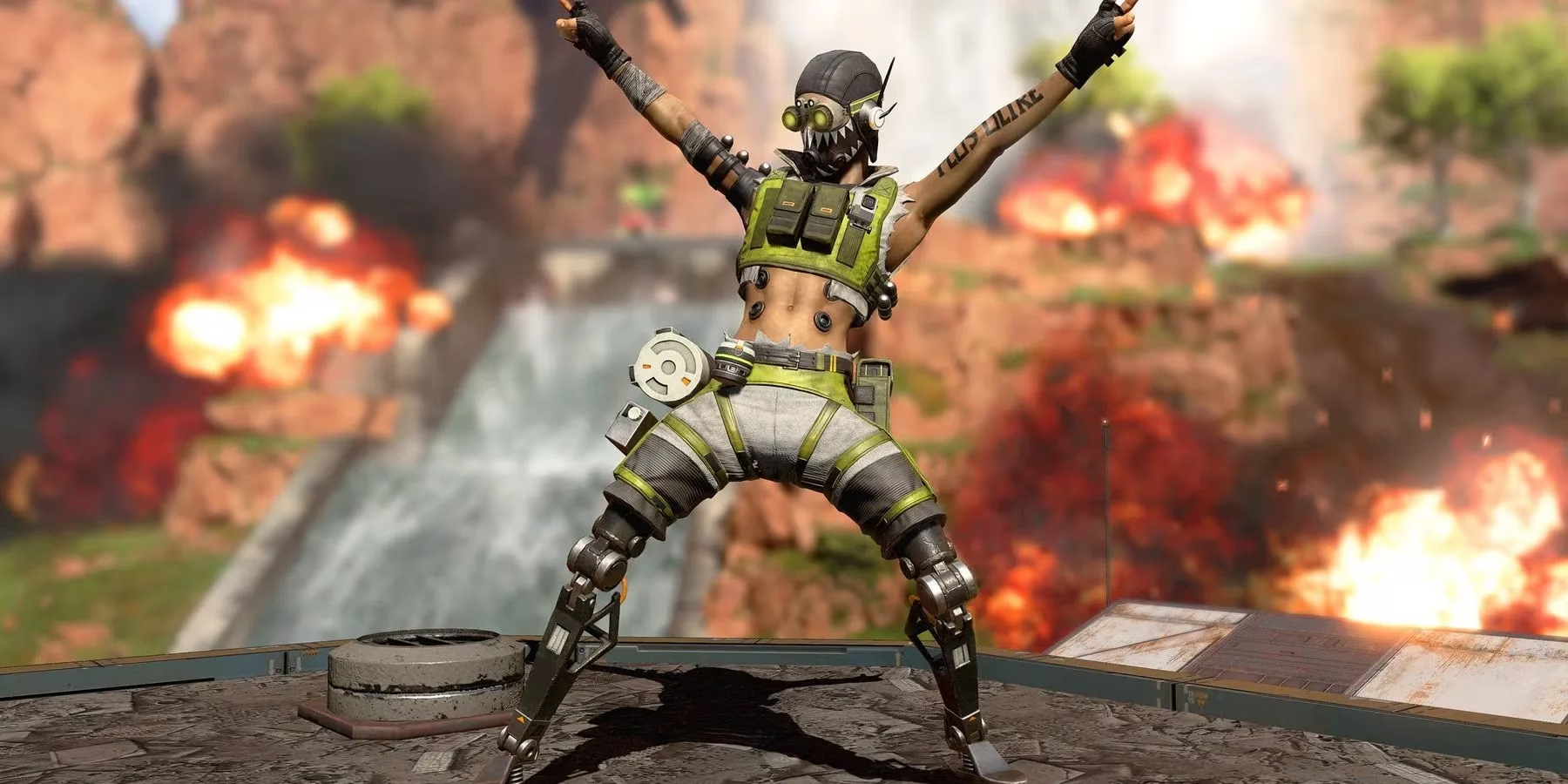
The game's launch was nothing short of legendary. Respawn Entertainment, previously renowned almost exclusively for the critically acclaimed Titanfall series, executed a stunning pivot. Instead of announcing the long-awaited Titanfall 3, the studio opted for a surprise shadow-drop of Apex Legends. This bold strategy paid off spectacularly. Player adoption was meteoric, with the game surpassing 25 million unique players in its first week alone. The initial appeal was clear: fast-paced, tactical combat set in vibrant, vertical maps, all powered by a cast of distinct 'Legends,' each with unique personalities and game-changing abilities. This foundation proved incredibly strong, propelling the player count to 50 million within the first month and eventually surpassing the 100 million milestone by 2021. It wasn't just another battle royale; it was a polished, team-oriented shooter that carved out its own dominant niche.
For years, Respawn has supported this massive community with a relentless stream of new content. Across 17 major seasons and beyond, the game has evolved dramatically. The development team has introduced:
-
New Maps & Arenas: Expanding the playground from the original Kings Canyon to sprawling locations like World’s Edge, Olympus, and Storm Point.
-
A Growing Roster: The launch cast of 8 Legends has more than doubled, adding complex characters like Valkyrie, Seer, and Vantage, each altering the game's meta.
-
Weapons and Gear: A steady influx of new firearms, hop-ups, and equipment has kept the loot pool fresh and the combat dynamic.
-
Limited-Time Modes & Events: From the chaotic 'Armed and Dangerous' to narrative-driven 'Quest' events, these have provided constant variety.
-
Cosmetic Overhauls: An extensive array of skins, heirlooms, and prestige items have fueled the game's free-to-play economy.
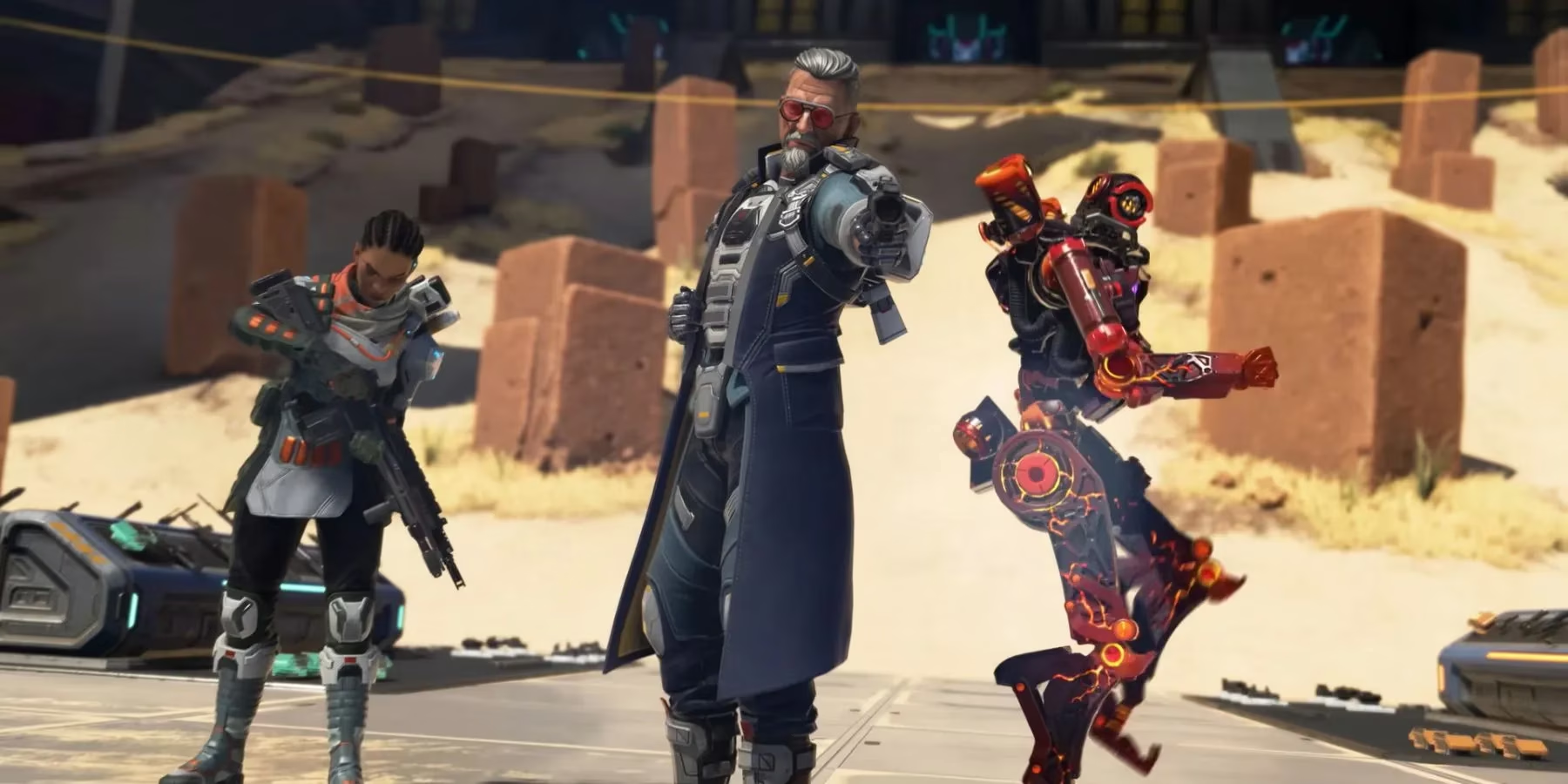
This consistent update cycle has been the lifeblood of Apex Legends. While not every addition has been universally praised—some meta shifts and Legend balances have sparked community debate—the overall commitment to growth has been undeniable. The game cultivated a robust esports scene with the Apex Legends Global Series (ALGS), fostering a level of competitive play that rivals any shooter on the market. The narrative 'Legacy' of the Outlands, told through in-game comics, animated shorts, and seasonal quests, has given the world a surprising depth, transforming it from a simple arena into a lived-in universe with factions, history, and ongoing conflicts. This holistic approach to live service is a key reason why, even in 2026, Apex Legends maintains a formidable and passionate player base.
However, the horizon is not without its clouds. The long-term future of Apex Legends appears less certain today than it did at its peak. Several factors contribute to this growing sense of uncertainty within the gaming community. Firstly, the shutdown of Apex Legends Mobile in early 2023, despite it winning Mobile Game of the Year awards, was a significant blow. It signaled that the Apex brand could not seamlessly conquer every platform and raised questions about the franchise's overall market saturation and appeal beyond its core console and PC audience. While the mobile version's failure doesn't directly indicate trouble for the main game, it was a worrying data point regarding the IP's expansion potential.
Secondly, Respawn Entertainment itself has dramatically diversified its portfolio. No longer a studio focused on a single franchise, it has successfully launched the Star Wars Jedi series (with two acclaimed titles), ventured into VR with Medal of Honor: Above and Beyond, and is confirmed to be working on multiple new projects. This expansion is a natural progression for a successful developer, but it inevitably leads to resource allocation questions. There is a palpable concern among fans that talent and attention may be gradually shifted away from Apex Legends to fuel these new ventures. This pattern has historical precedent in the industry, where ongoing live-service games sometimes enter a maintenance mode as studios chase new projects.
Finally, the competitive landscape has intensified. The battle royale and hero shooter genres are more crowded than ever. Titles like Overwatch 2 have re-entered the fray with their own successful free-to-play models, directly competing for players' time and engagement. The constant need to innovate and retain players in this environment is a tremendous challenge. Player fatigue is a real phenomenon, and sustaining the same level of hype and engagement into a game's seventh year and beyond is a monumental task for any development team.
What does this mean for the player in 2026? Apex Legends is far from a ghost town; servers are active, new seasonal content still rolls out, and the ALGS continues to crown champions. Yet, the golden age of explosive, unchecked growth has likely passed. The game's evolution may slow, with updates potentially becoming more about balance and sustainability than revolutionary new features. The community's role has also evolved—from wide-eyed newcomers to veteran custodians of a game they love, often creating their own content and traditions, as seen in elaborate fan projects like recreating iconic locations in other games.
In conclusion, Apex Legends' journey from a surprise hit to a gaming institution is a remarkable chapter in video game history. It redefined what a battle royale could be and fostered one of the most dedicated communities in online gaming. Its legacy is already secure. However, the natural lifecycle of a live-service game, combined with studio evolution and market pressures, suggests that its period of dominant, industry-leading growth is transitioning into a phase of sustained operation. The end is not imminent, but the writing is on the wall for a gradual wind-down. For now, Legends continue to drop into the arena, guns are still fired, and champions are crowned. But each passing season carries the bittersweet knowledge that this incredible run, like all things, cannot last forever. Players are advised to savor the matches, the clutch victories, and the squad wipes while they can, for the Outlands' future, while still bright, is inevitably finite.
Leave a Comment
Comments