Since its launch, Apex Legends Mobile has continuously evolved, and one of its most fast‑paced offerings remains the exclusive Team Deathmatch mode. As we step into 2026, the mobile arena is more competitive than ever, with squads of six battling to be the first to reach thirty eliminations. Unlike the traditional battle royale drop, this mode demands a completely different mindset – but what truly separates the winning squads from the rest? The answer often lies in a handful of refined strategies that blend classic Apex mechanics with the breakneck rhythm of respawn‑based combat.

Communication has always been the glue of any successful Apex squad, and in Team Deathmatch it becomes the single most decisive factor. With twelve players locked in a tighter arena, every call‑out counts. Teams that actively share enemy positions, coordinate ultimate timings, and adjust spawn control almost always outperform disorganized opponents. After all, how often have you seen a silent team get picked off one by one? In 2026, the meta has deepened: players now pair voice pings with the updated quick‑chat wheel to instantly relay flank routes or low‑health targets. Understanding each legend’s role becomes non‑negotiable. If your squad mate runs Lifeline, you know to protect her for faster revives; if someone picks Octane, the team can execute aggressive pushes. This synergy doesn’t just happen – it is built through pre‑match discussions and adapting on the fly. When every member knows the collective game plan, reaching those thirty points feels less like a scramble and more like a choreographed assault.
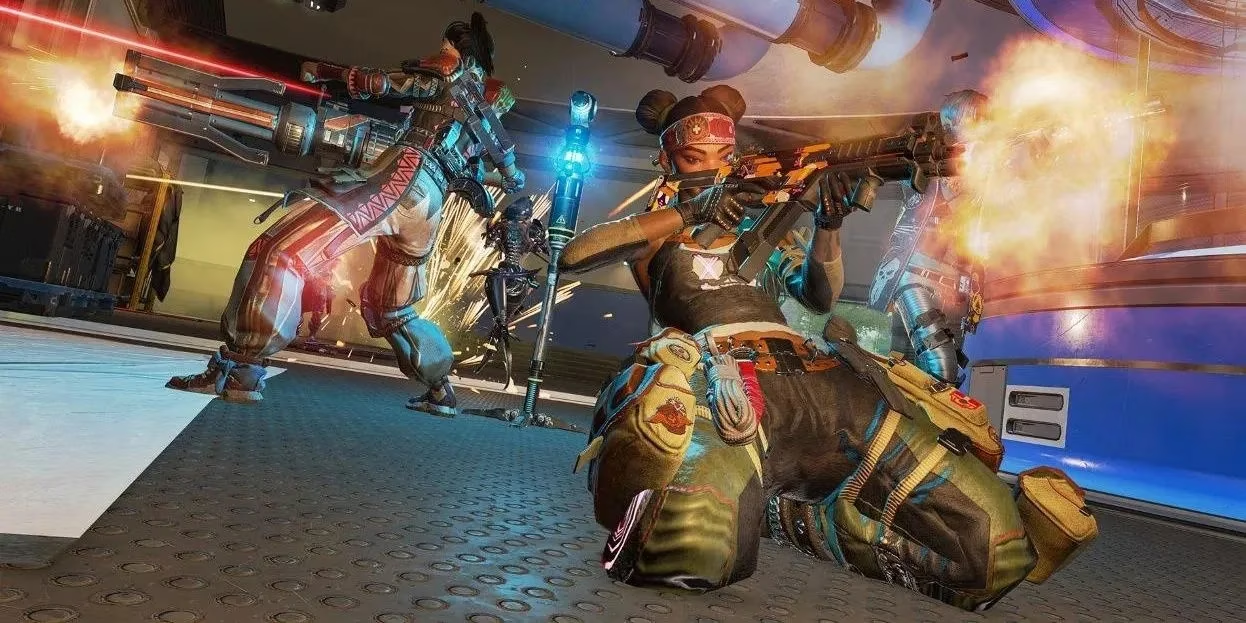
Weapons in Team Deathmatch work differently than in the battle royale. Instead of scavenging floor loot, players select a loadout before the round begins, much like Arenas, but with a crucial twist – there are no ammo resupply stations. Once your magazine runs dry, you must swap to a fallen enemy’s weapon or rely on your secondary. This twist forces a dynamic playstyle: do you burn through your favorite R‑99 early, or do you conserve bullets for the final push? Care packages still drop from the sky, offering upgraded guns and gold attachments, but they are double‑edged. Rush for that shiny Kraber and you may walk straight into a waiting three‑man ambush. Smart squads in 2026 use care packages as bait, turning them into kill zones rather than loot stops. Is the risk worth the reward? Only if your team has already secured the surrounding sightlines. The weapon meta has also matured – assault rifles like the Flatline still dominate mid‑range, while SMGs shred in close quarters, but the newly buffed shotguns introduced in last season’s update have made room‑clearing a legitimate art form.
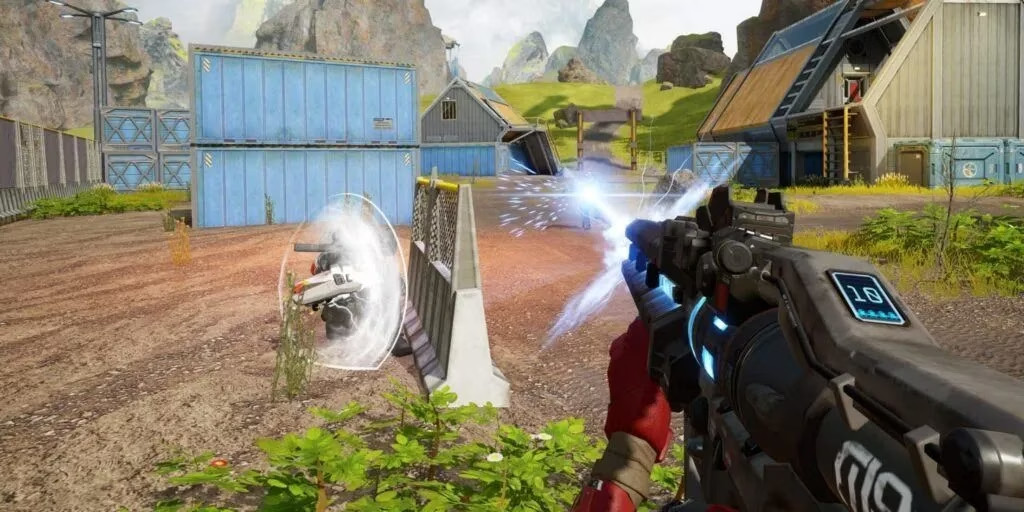
Legend selection in Team Deathmatch is far more strategic than simply picking a favorite. Once a teammate locks a character, that legend becomes unavailable for the rest of the squad, forcing diversity. This restriction, introduced to mirror competitive integrity, means every player should be comfortable with at least three legends. The mode doubles as a live‑fire training ground – where better to master Fade’s phase chamber or Rhapsody’s rowdy beats than in a six‑versus‑six scrim? Yet many players still ask: which legends actually thrive here? Support legends like Lifeline and Gibraltar maintain an impressive pick rate because their abilities tilt team fights decisively. Mobile legends such as Pathfinder and Octane allow you to break spawn traps and secure power positions early. Conversely, slower recon legends often struggle unless the player exploits unexpected angles. The key is to complement your team’s composition. If you see an aggressive Wraith and a defensive Caustic, a medic or a skirmisher can round out the push‑and‑hold dynamic. Adaptability is what transforms an average player into a TDM ace; forced to step out of your comfort zone, you discover hidden potential in legends you might never have tried otherwise.
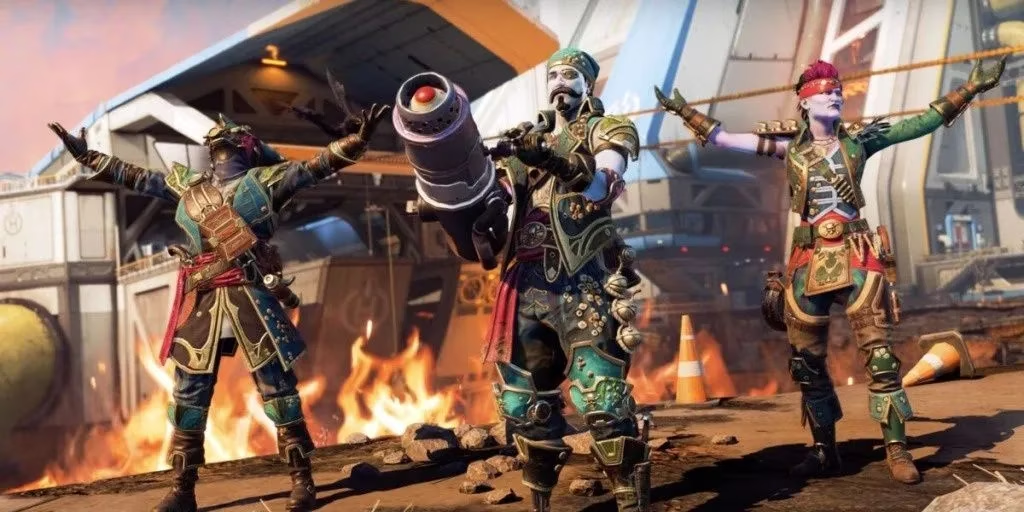
Context matters. While generalist legends can work in any scenario, picking a situational hero often tips the scales. On maps with long sightlines, a sniper‑oriented legend like Vantage can suppress entire lanes. In the cramped corridors of Overflow, Caustic’s gas traps become almost oppressive. Octane’s jump pad, already a favorite, has seen renewed importance on the redesigned Market map where verticality wins games. Is it better to one‑trick a single legend or to flex based on the map? The leaderboards suggest the latter – top players in 2026 switch between three main picks depending on the queue. This habit not only boosts your win rate but also deepens your game sense. When you understand how each legend’s ultimate interacts with the environment, you begin to predict enemy movements before they happen.
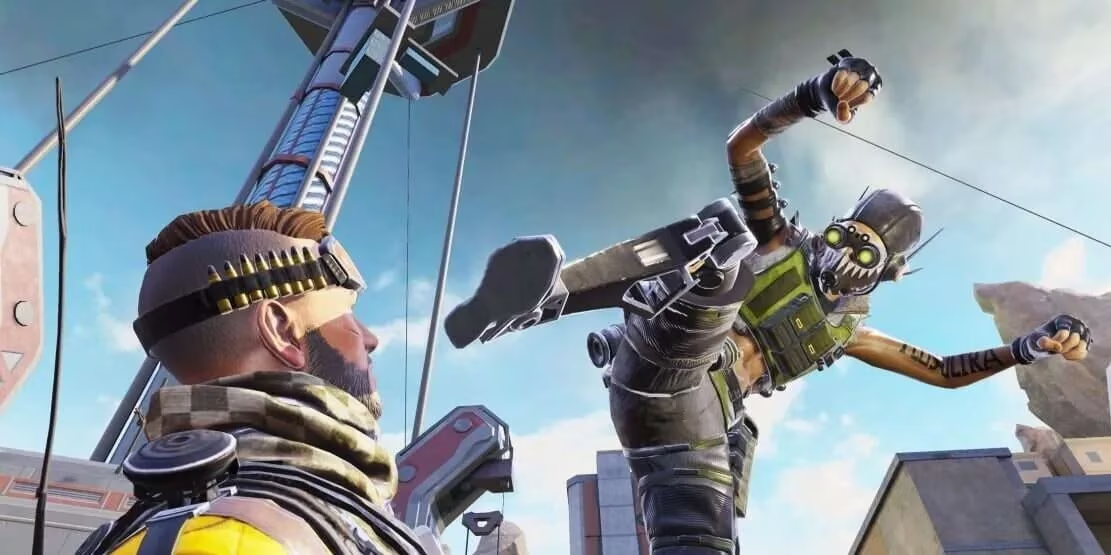
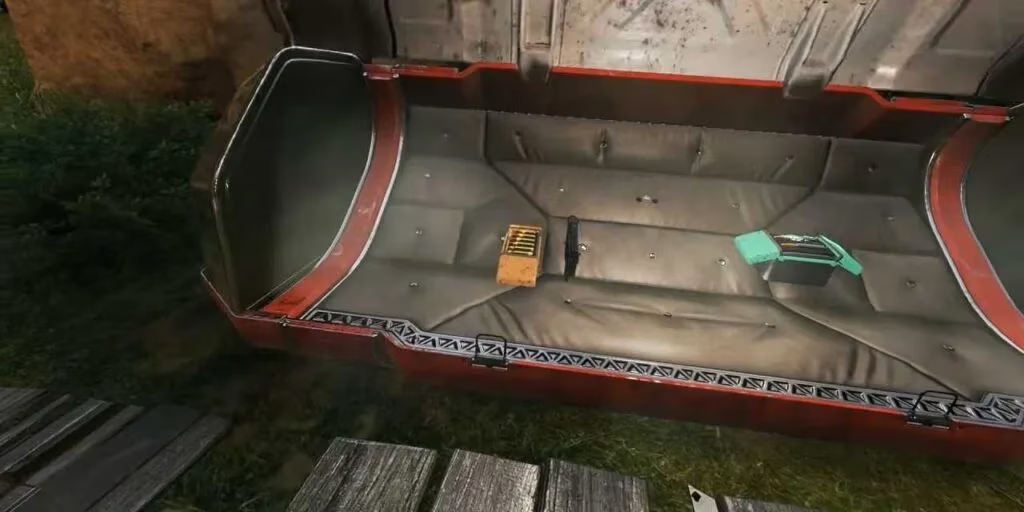
Looting still plays a crucial role despite the equalized starting gear. Every player drops into the match with the same level of armor and similarly‑equipped weapons, which strips away the gear gap and places pure skill in the spotlight. But as the match progresses, scavenging better shields from supply bins or care packages can shift the momentum. A well‑timed armor swap mid‑firefight – a technique now taught in the game’s built‑in tutorial – can turn a certain death into a squad wipe. The loot crates scattered across the map aren’t just afterthoughts; they encourage map movement and punish static camping. In 2026, the developers have increased the frequency of attachment drops, meaning you can deck out your weapon faster than ever before. Combine that with a legend whose abilities synergize with your playstyle, and you become a self‑sufficient powerhouse.
Ultimately, Team Deathmatch in Apex Legends Mobile is not merely a side activity – it’s a proving ground. The mode rewards communication, smart loadout management, flexible legend picks, and sharp mechanical skill in equal measure. Whether you’re grinding the ranked ladder or just warming up for a battle royale session, these strategies will keep you ahead of the curve. The mobile battlefield continues to evolve, and those who adapt will always find their way to victory.
Leave a Comment
Comments