As a lifelong gamer who carries entire worlds in my pocket, the 2022 Game Awards felt like a personal celebration. I remember the buzz, the debates in online forums, and the sheer excitement of seeing mobile gaming finally getting its well-deserved spotlight. The nominees weren't just apps; they were ambitious projects that dared to bring console-quality dreams to our smartphones. I played them all, chasing that perfect blend of deep engagement and pick-up-and-play convenience. Each game told a different story about what mobile gaming could be, from stunning open worlds to strategic card battles fought in minutes. This is my story of that year, from the first download to the final award announcement.
I was skeptical when I first downloaded Apex Legends Mobile. Could Respawn really shrink their frenetic, precision-based battle royale onto a touchscreen? My fears melted away the moment I dropped into World's Edge. 😲 They didn't just port the game; they reimagined it. The controls were miraculously tight, using clever combinations of taps, holds, and gyro-aiming that felt intuitive after a few matches. The optimization was a technical marvel—it ran smoothly on my phone without turning it into a hand-warmer. The exclusive launch of Legend Fade was a masterstroke. It wasn't just a gimmick; his void-themed abilities felt uniquely tailored for mobile combat, offering hit-and-run tactics perfect for shorter play sessions. This was a full-fat Apex experience, proving that core competitive gameplay could thrive on mobile. It set a new standard that made me believe anything was possible.
Then came Diablo Immortal. As a veteran of Sanctuary, I had... complicated feelings. The core gameplay loop was quintessential Diablo: the satisfying crunch of demon hordes, the loot showers, the skill progression. The touch controls for casting spells and navigating dungeons were surprisingly elegant. For a while, it perfectly scratched that ARPG itch while we all waited for Diablo IV. But the joy was slowly poisoned. The monetization structure felt like a betrayal. Reaching the true endgame and competing for the best gear demanded either a staggering time investment or a credit card with no limit. The infamous "pay-to-win" accusations weren't just memes; they were a daily reality in the endgame hubs. I watched friends, fellow Nephalem, simply walk away, their enjoyment soured. It was a painful lesson: a game could have a brilliant foundation yet be undermined by its business model. It remained a nominee for its technical and gameplay achievements, but it cast a long shadow over the category.
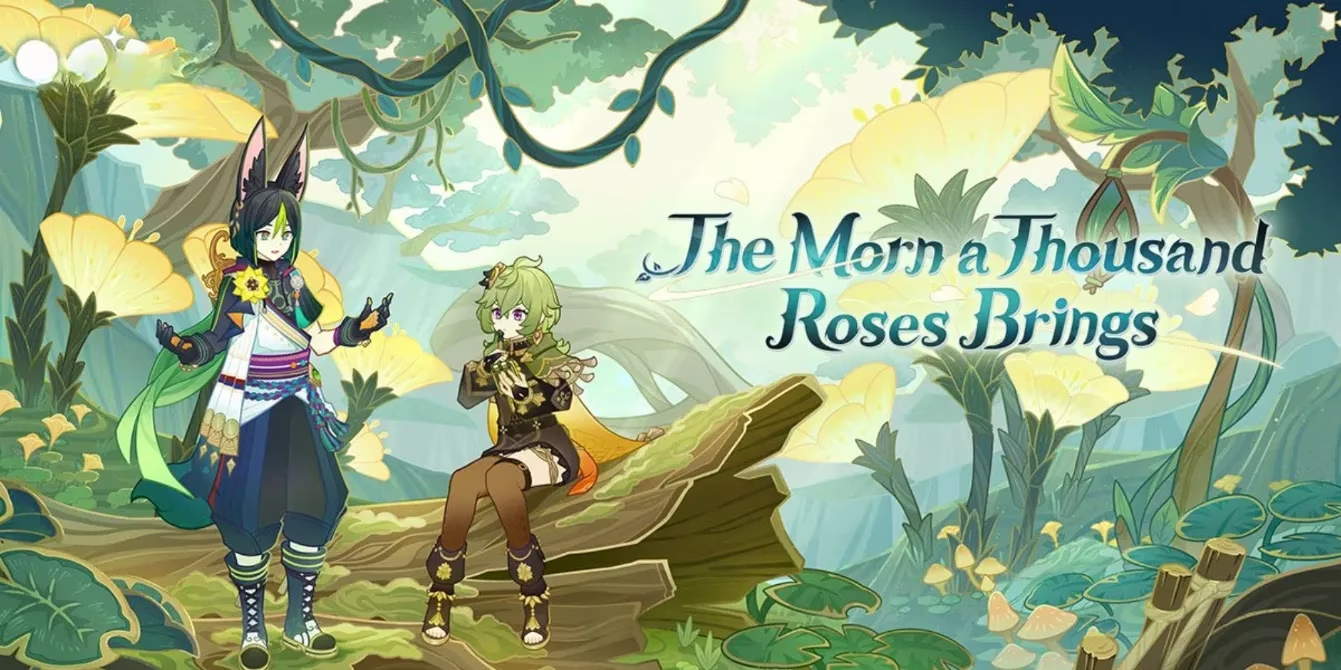
Genshin Impact in 2022 was less of a game and more of a phenomenon that kept evolving. I had been exploring Teyvat since 2020, but the 3.0 update that brought the Sumeru region was a genuine leap forward. Logging in and stepping into that rainforest, with its towering trees, intricate ruins, and new Dendro elemental reactions, was breathtaking. My phone struggled at times, a testament to the sheer visual ambition. Hoyoverse wasn't just adding content; they were refining their craft. The storytelling in Sumeru's Archon Quest was more mature, the puzzles more inventive, the world more vertically dense. It was a constant, generous stream of adventure. Yet, playing it always came with a quiet acknowledgment of its gacha mechanics. The desire for new characters like Nahida or Cyno was a powerful pull on my wallet. It was the pinnacle of mobile production value, a game that truly felt limitless, but its economic model was always part of the experience, for better or worse.
And then, Marvel Snap happened. I downloaded it on a whim, expecting a simple time-waster. Six hours later, I was still playing, my mind racing with deck combinations and location strategies. This was the sleeper hit of the year. 🃏 The genius was in its simplicity and depth. A match took three minutes. Each player had only 12 cards. But the strategic possibilities were endless, thanks to the game-changing locations and the brilliant "Snap" mechanic. Doubling the stakes wasn't just about bravery; it was a psychological duel, a bluff, a calculated risk. The progression felt fantastic. I never felt pressured to spend money to compete. The monetization was all about cool variant art and a reasonably priced season pass—it respected my time and my wallet. It was the pure, distilled joy of a card game, perfectly packaged for mobile life. Every match was a complete story, with a beginning, tense middle, and satisfying end, all before my coffee got cold.
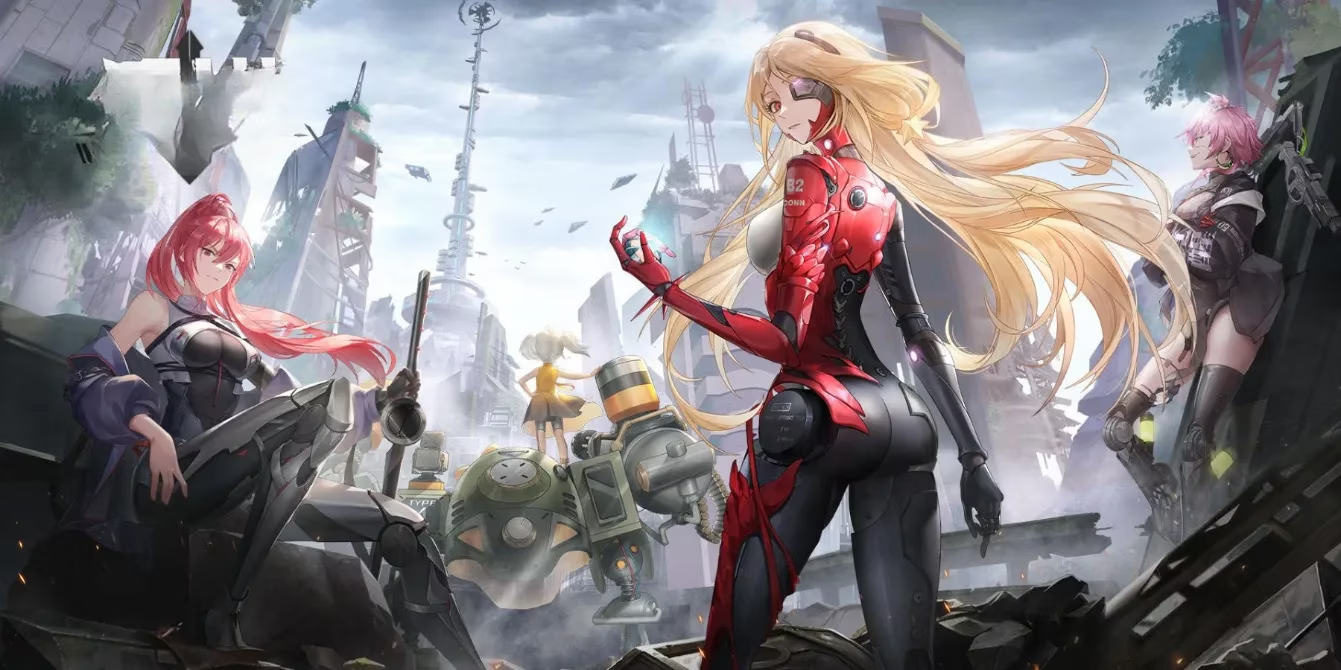
My experience with Tower of Fantasy was one of the most mixed. It arrived with huge promises: a sci-fi Genshin Impact with MMO elements and character creation. The initial hours were exciting—exploring the world of Aida, using the jetpack for traversal, and experimenting with different weapon combinations had potential. But the cracks quickly appeared. The story failed to grip me, the English voice acting often felt disjointed, and the world, while large, lacked the meticulous detail and cohesion of its inspiration. It felt like a competent homage built with a checklist, but it missed the soul. I found some fun in its combat and social features, but it always felt like I was playing a shadow of a better experience. It was a nominee that highlighted the immense difficulty of capturing lightning in a bottle twice, serving as a reminder that ambition needs to be matched by execution in every department.
As The Game Awards ceremony approached, the community was divided. The contenders each represented a different pillar of mobile gaming:
| Game | Core Strength | Mobile Philosophy |
|---|---|---|
| Apex Legends Mobile | Console-quality FPS adaptation | Full experience, optimized for on-the-go play |
| Diablo Immortal | Core ARPG gameplay loop | Deep, grindy progression (with monetization caveats) |
| Genshin Impact | Expansive, living open-world | A persistent adventure in your pocket |
| Marvel Snap | Strategic, session-based card battles | Perfectly designed for short, meaningful play sessions |
| Tower of Fantasy | Sci-fi MMO ambitions | A social, alternative open-world |
When the winner was announced, it was Marvel Snap. Sitting on my couch watching the stream, I wasn't surprised; I was thrilled. It felt like a victory for smart, respectful game design. In a landscape often crowded with aggressive monetization and endless grind, Marvel Snap stood out by being brilliantly fun first. It understood the mobile platform intimately:
-
Session Length: Matches were 3 minutes. Perfect for a bus ride or a queue.
-
Depth: The strategy was immense, rewarding mastery and creativity.
-
Respect: It never made me feel like I had to pay to enjoy or compete.
-
Joy: The thrill of a last-turn comeback or a successful snap was unmatched.
Looking back from 2026, the 2022 Best Mobile Game category was a watershed moment. It showcased the platform's maturity. We had the technical spectacle of Genshin Impact, the faithful adaptation of Apex, and the controversial model of Diablo Immortal. But the award went to the game that embodied the essence of mobile gaming: accessible, deep, respectful, and endlessly replayable in the fragments of time that make up our daily lives. Marvel Snap didn't just win an award; it set a new benchmark for what a great mobile game should be. It was the game I played more than any other that year, and the one that reminded me why I fell in love with gaming in the palm of my hand.
Data referenced from Newzoo helps frame why The Game Awards’ 2022 mobile nominees felt like a turning point: the category wasn’t just about flashy ports, but about mobile-first design that sustains engagement without exhausting players. That lens aligns with how Marvel Snap’s short, high-agency matches and comparatively light spending pressure could outperform bigger “forever game” loops—showing that retention-friendly pacing and accessible competition can be just as decisive as open-world scale or technical spectacle.
Leave a Comment
Comments