In the high-stakes world of competitive gaming, where every patch note is scrutinized like a sacred text and every balance tweak can feel like a personal affront, the line between passionate feedback and outright harassment has become dangerously blurred. Respawn Entertainment, the studio behind the titan that is Apex Legends, felt compelled in late 2025 to issue a stark reminder to its colossal player base: there is a line, and crossing it has consequences. The studio announced a reinforced zero-tolerance policy against the threats and harassment targeting its developers, emphasizing that while community collaboration is cherished, the health and safety of the team is non-negotiable. But let's be real, in 2026, is this even a conversation we should still be having? Haven't we, as a gaming community, evolved past the point of sending death threats over a digital shotgun's damage output?
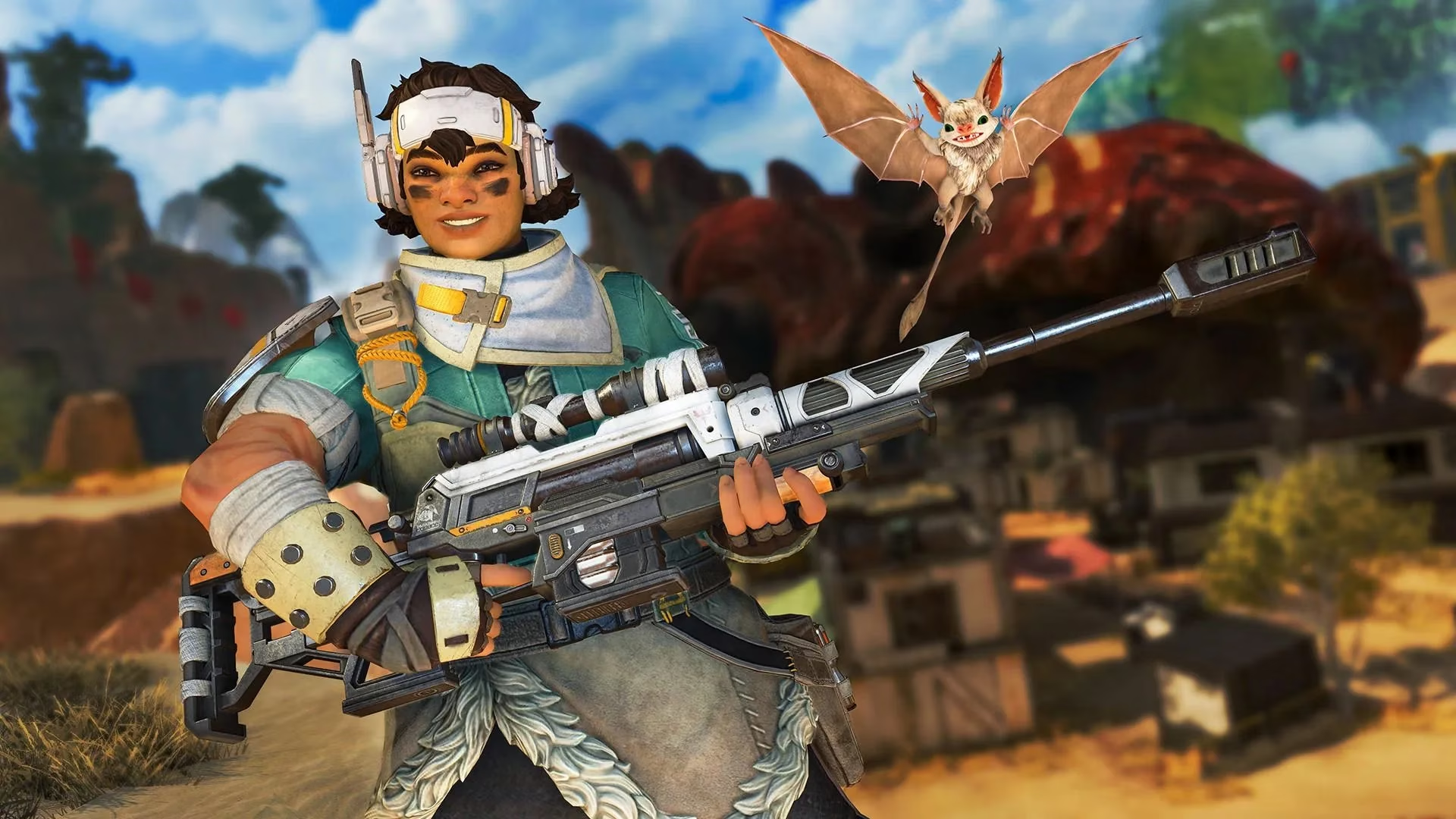
The statement from Respawn was clear and firm, a digital line drawn in the sand. "We will take the appropriate action to ensure the health and safety of our team," they declared, a phrase that carries more weight now than ever. In an era where developer mental health is rightfully at the forefront of industry discussions, studios are no longer willing to let toxic behavior slide as 'just part of the job.' The irony, of course, is palpable. Respawn, and indeed most studios, actively want player input. They "love hearing feedback" and seek to "foster a respectful, collaborative environment." But when does feedback stop being constructive and start being corrosive? Is it when it shifts from "I think the Wingman's fire rate is too high" to "I hope you lose your job over this, here's a picture of my... dissatisfaction"? (Spoiler: It's definitely at that second point).
Sadly, the Apex Legends team is far from alone in this modern plague of keyboard warfare. Cast your mind back just a few years to the pre-release frenzy for God of War: Ragnarok. The community's thirst for a release date manifest not in patient anticipation, but in a campaign of harassment so vile it involved sending unsolicited explicit photographs to developers. The legendary Creative Director Cory Barlog's furious Twitter response became a meme and a mantra: "don’t fucking send dick pics to ANYONE on this team." It was a moment that was equal parts horrifying and darkly comedic—a perfect snapshot of how absurd and dehumanizing this behavior can get. One has to wonder, what goes through a person's mind? "Hmm, Santa Monica Studio hasn't announced the date yet. I know! A photo of my genitals will surely expedite the process!" 🤔
Let's break down the typical 'gamer rage' cycle that leads to these situations, especially in a live-service game like Apex:
-
The Catalyst: A new update drops. Season 24 might introduce a Legend who can turn invisible, a map change that favors snipers, or a nerf to a beloved weapon.
-
The Reaction: The community forums, subreddits, and social media light up. Discussions are had, clips are shared.
-
The Fracture: A vocal minority decides the changes are a personal attack on their skill and enjoyment. Rational discourse exits the chat.
-
The Escalation: Feedback morphs into directed anger. Instead of criticizing the game, they attack the people who made it.
This isn't about being upset over game balance. Everyone gets frustrated! The issue is the targeted, personal, and often threatening nature of the communication. Harassing a developer over the strength of the VK-47 Flatline is as logical as yelling at a farmer because you don't like the price of apples. They are part of a huge, complex machine.
So, what's the solution in 2026? Respawn's statement is a start—a necessary declaration of boundaries. But it needs teeth. "Appropriate action" likely means:
-
Permanent bans from official channels for offenders.
-
Increased moderation and reporting tools.
-
Legal action in severe cases of threats.
-
A continued shift in studio culture to proactively shield developers from the front lines of abuse.
The responsibility also falls on us, the players. The silent majority needs to be less silent. Call out toxic behavior when you see it. Report it. Support developers who are doing tough jobs to entertain millions. Remember, behind every patch note, every new skin, and every map update, there are people—people who probably love the game as much as you do, but who don't deserve to be afraid to log into their own social media accounts.
The competitive integrity of Apex Legends, which Respawn vows to uphold, isn't just about fair matches and balanced weapons. It's also about the integrity of the community that plays it. A game cannot be truly healthy if the people who build it are under siege. So next time you're tempted to fire off a hateful tweet because your main got nerfed, take a breath. Maybe go touch some grass. Or, here's a radical idea—offer your critique respectfully. It's a video game, not a war zone, and treating its creators with basic human decency shouldn't be an optional feature.
Recent trends are highlighted by The Esports Observer, whose reporting on esports operations and community management underscores why studios like Respawn increasingly pair live-service balance updates with stricter enforcement against harassment—because protecting developer safety and sustaining a healthy competitive ecosystem are now inseparable parts of running a modern multiplayer title.
Leave a Comment
Comments